
General Secretary To Lam has clearly affirmed:“Vietnam has chosen a very clear path: science and technology, innovation, digital transformation, and the knowledge economy will be the primary drivers of growth in the coming period.”However, amid these pioneering technologies and national ambitions, a rarely discussed gap is becoming increasingly evident. Beyond the shortage of high-level technical talent, Vietnam is facing a serious risk of failing to retain mid-level human resources and operational technicians—the very people who directly operate, manage, and master technology.
In this context, recent remarks by billionaire Jensen Huang, CEO of NVIDIA, offer Vietnam a global perspective. Electricians, plumbers, and carpenters—hundreds of thousands of such workers will be needed to build these technology factories. “Operational technical roles and infrastructure technicians will be at the heart of the AI revolution, and without them, the entire system will be bottlenecked,” Huang emphasized.
At the International Forum on Digital Human Resources, held within the framework of Vietnam International Digital Week 2025, many experts warned that Vietnam could face a shortage of 150,000–200,000 mid- to high-level engineers and technicians over the next five years in sectors such as energy, digital infrastructure, smart cities, and healthcare.
This highlights a striking paradox: while Vietnam is actively seeking “AI talent” and “data engineers,” and massively recruiting students for university programs in information technology and artificial intelligence, little attention is paid to the force of “digital workers”—technicians responsible for operating, maintaining, and implementing technology. These workers form the backbone of data centers, digital infrastructure, and the innovation ecosystem. If AI is a building, then skilled technicians are its solid foundation—without which the structure cannot stand sustainably.
Beyond training alone, a more difficult challenge facing Vietnamese technology enterprises today is how to retain and develop strategic human resources. As competition for highly skilled professionals intensifies, many companies are experiencing “brain drain” immediately after completing comprehensive training programs. This has become a real challenge, forcing businesses to seek more holistic and sustainable solutions.
Mr. Lai Thien Phong, Chairman of Nam Hanoi Geomatics & Construction Company, stated:“As a technology enterprise working with many domestic and international organizations, we deeply understand this ‘pain point.’ Technology can be purchased, but people must be prepared early. That is why we not only develop digital solutions based on digital twin platforms for land administration and urban infrastructure, but also continuously collaborate on training programs, capacity-building workshops, and the transfer of technical teams to local authorities. In practice, technology has reduced data collection time by up to 90%, accelerated planning by two to five times, cut costs, and optimized more than 50% of operational manpower. More importantly, however, the way technology is transferred, training is delivered, and solutions are designed must help retain skilled workers and develop their expertise—rather than losing them to other jobs or organizations.”
From an international perspective, Klaus Wwehage, CEO of 10X Innovation Lab, commented:“Vietnam has implemented its ‘digital literacy for all’ strategy very effectively. However, for AI to truly serve digital government, it is essential to deeply train civil servants in data-driven thinking and risk management.”He emphasized that training alone is insufficient unless an environment is created that empowers teams to make decisions, experiment, and innovate.
It can be observed that government-led initiatives—such as Vietnam International Digital Week 2025 in Ninh Binh, recent provincial forums on science, technology, innovation, and digital transformation in Hung Yen, and particularly exhibitions showcasing technological achievements such as A80—demonstrate Vietnam’s strong and decisive commitment. The Ministry of Science and Technology has also successfully organized numerous technology events with broad participation not only from domestic technology enterprises but also from international companies and organizations, fostering momentum and creating favorable conditions for the development of a robust technical and innovation ecosystem.
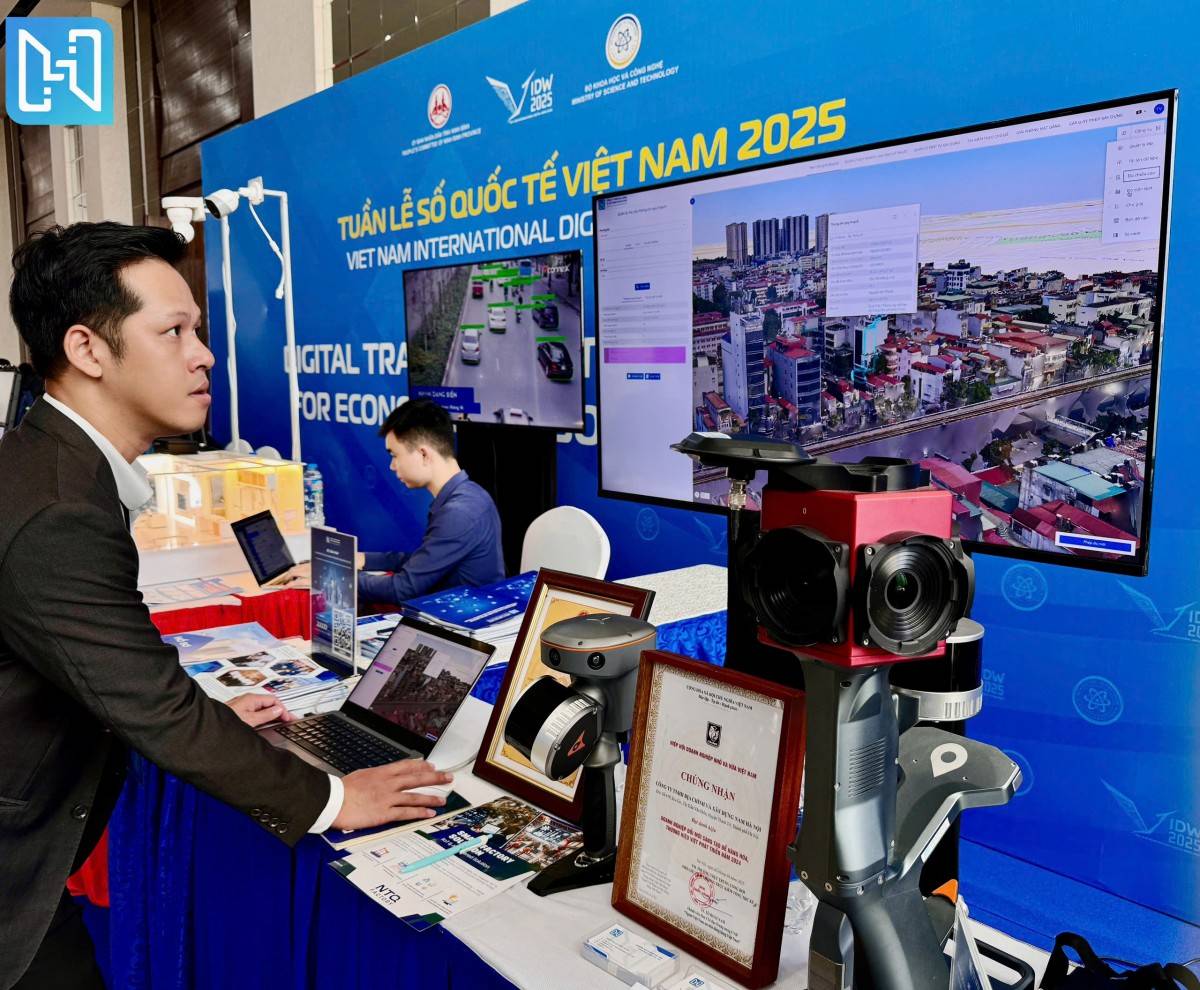
During the forum’s panel sessions, experts put forward three core solutions.
First, it is essential to identify strategic human resource groups—including engineers, technicians, and data specialists—and to develop clear career pathways, creative working environments, and retention policies to keep them.
Second, digital thinking, critical reasoning, data literacy, and risk management should be integrated into curricula from general education through civil service training, ensuring a continuous “human capital cycle” from talent development to governance.
Third, a national AI investment fund should be established, along with a controlled experimental legal framework (sandbox model), enabling enterprises and technical professionals to innovate through experimentation, failure, rapid learning, and capability upgrading.
However, this is still not enough. Businesses, organizations, and the nation must be able to retain their people.
If Vietnam focuses solely on training without addressing retention, it risks repeating the mistakes of many countries—having technology and investment, but lacking operators and professionals capable of advancing high-level technical expertise. As rapid technological change places increasing pressure on skilled technicians, many gradually leave their positions, while large numbers of technical trainees choose to study abroad or seek higher-paying jobs overseas.
Without a strong operational foundation, all ambitions to build AI hubs will remain fragile. Strategies to attract and retain talent and prevent brain drain will be extremely challenging if not addressed from this moment onward. Too often, we become overly confident in grand ambitions while overlooking seemingly small but fundamental factors.
Vietnam has a young population, strong aspirations, and firm commitment from both the government and enterprises. Educational institutions, in particular, play a critical role in guiding students and trainees from the outset. The pressing question is how to make these professions attractive to the new workforce—not only in terms of income, but also in status and long-term prospects. This is a challenge that must be solved now.