This was one of the most in-depth discussion sessions to date on the development strategy for 11 strategic technology sectors, carried out in the spirit of “mobilizing global Vietnamese intellect and taking urgent action in the coming years.”
From the very outset of the meeting, Deputy Prime Minister Nguyen Chi Dung emphasized that Vietnam is entering a new phase of growth, in which science and technology and innovation will serve as the primary driving forces. Politburo Resolution No. 57-NQ/TW and Prime Ministerial Decision No. 1131/QD-TTg clearly identify 11 strategic technology sectors along with 32 key priority products, laying the foundation for Vietnam’s pioneering technology ecosystem.
.jpg)
Deputy Prime Minister Nguyen Chi Dung requested that the working session focus on a core question: “In the next one to two years, what must Vietnam do to rapidly develop its strategic technology sectors?” He spoke candidly, noting: “We are still struggling to identify the right major challenges and to design programs that are strong enough to lead and shape entire industries. I expect experts to propose practical, feasible, and breakthrough solutions, rather than broad and generic analyses.”
After listening to the experts’ recommendations, the Deputy Prime Minister drew particular attention to urgent, large-scale issues that are directly affecting people’s daily lives and the country’s development. These range from climate change–driven storms, floods, and landslides across many localities, to traffic congestion in major cities, as well as urban pollution and flooding—challenges that many countries, such as the United Kingdom, have had to invest hundreds of billions of US dollars to address.
According to him, only technology can serve as the key to mastering new industries, developing advanced materials, and resolving the nation’s critical, long-term challenges.
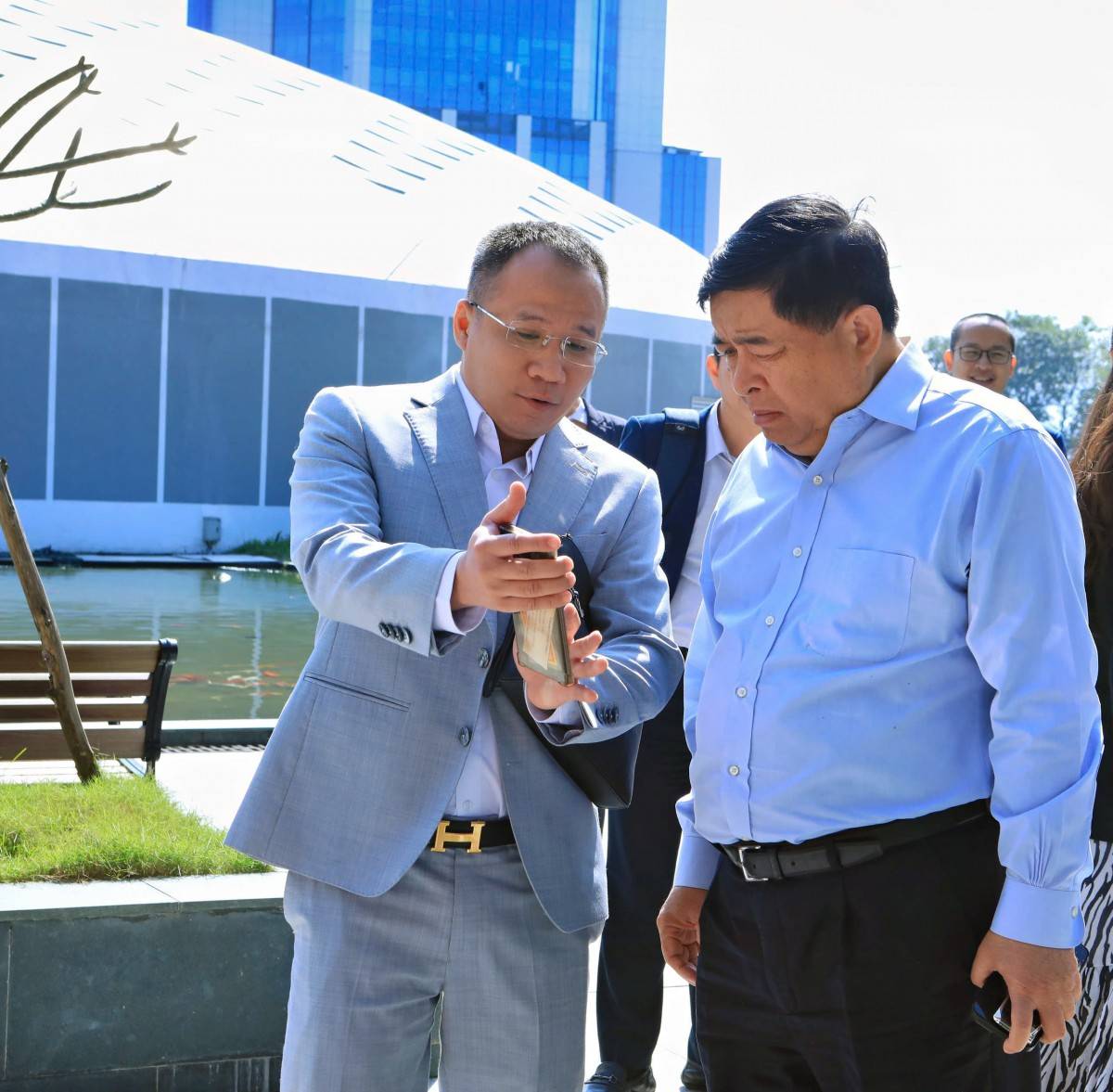
At the event, speaking with Business and Integration Magazine, Lai Thien Phong, Chairman of Nam Hanoi Geomatics & Construction Company, shared:“I clearly sensed the Deputy Prime Minister’s deep concern over the country’s major challenges—from storms, floods, and landslides that cause severe disasters, to the urgent need for practical development of strategic technology sectors. We have been deploying real-time technology solutions across multiple projects and localities to warn residents against entering landslide-prone areas, while also simulating and issuing flood alerts to support rescue operations and evacuations ahead of dam releases and flooding. These technologies also monitor discharge volumes and detect dam-body deformation in real time, helping ensure reservoir safety, mitigate risks to communities, and protect the people and the nation in a practical and effective manner.”
During the working session, Deputy Prime Minister Nguyen Chi Dung emphasized that institutional and regulatory completion is one of the key foundations for Vietnam to successfully develop its strategic technology sectors. In recent years, the number of laws, decrees, circulars, guidelines, and mechanisms jointly developed—particularly with coordination from the Ministry of Science and Technology—has reached a record level, creating a smooth legal corridor for research, experimentation, technology transfer, and public–private partnerships. He affirmed that by the end of December this year, the entire new institutional framework will be fully synchronized, removing all remaining legal bottlenecks within the innovation ecosystem.
The Deputy Prime Minister stressed that the development of strategic technologies should not be confined solely to the list of 11 sectors and 35 products. The vision must be broader—one in which technology directly impacts safety, productivity, social well-being, and national competitiveness. To achieve this, the innovation ecosystem must function as an integrated whole: the State providing strategic leadership; enterprises serving as the center of innovation; universities and research institutes supplying knowledge and human capital; and the global Vietnamese expert community acting as a pioneering force in bringing technology into real-world application.
During the discussion, based on expert input, the Deputy Prime Minister highlighted the importance of establishing mechanisms to attract “Chief Engineers” and “Chief Architects” for national technology projects—two pivotal roles responsible for system architecture design, technical standards, core technologies, and execution organization—aimed at reducing risks and ensuring strategic coherence.

In the field of cybersecurity, Ngo Minh Hieu (Hieu PC), Director of the Vietnam Anti-Scam Center, proposed the following solutions:“For Vietnam to move rapidly in strategic technology sectors, we must start with digital trust, clean data, and battle-ready human resources. Over the next one to two years, Vietnam should establish a National Center for Anti-Scam and Cybercrime Prevention, build a secure data-sharing sandbox framework, and invest in training AI and cybersecurity engineers. In the long term, we must develop a Vietnamese digital sovereignty ecosystem, become a cybersecurity hub for Southeast Asia, and promulgate a new-generation digital user protection law.”
The discussion also featured insights from many experts representing key sectors and innovation networks.
In the semiconductor sector, experts from Taiwan (China)—where more than 40,000 Vietnamese students are studying, about half of whom are in engineering disciplines—proposed strengthening cooperation in training, internships, and technology transfer through the INTENSE model, with plans to offer 880 STEM–semiconductor scholarships by 2026.
In biomedicine, representatives from Genetica analyzed global market responses to AI–genomics technologies and the potential to establish a regional biohub in Vietnam.
Experts in UAV and low-altitude aviation shared lessons from South Korea, recommending that Vietnam enter the small- and medium-UAV segments while investing in a comprehensive low-altitude airspace management ecosystem.
Representatives of Dassault Systèmes highlighted the potential to establish a Digital Twin and AI R&D Center in collaboration with the National Innovation Center (NIC), aiming to train a workforce of “Make in Vietnam” Virtual Twin–AI engineers.
Speaking at the event, the Deputy Prime Minister said he was “deeply impressed by the dedicated, practical, and forward-looking contributions aligned with global technology trends.” He emphasized that Vietnam stands before a major opportunity to achieve a breakthrough, and that all proposals presented would make important contributions to the national strategic technology ecosystem. The Government, he affirmed, is committed to accompanying stakeholders and rapidly implementing feasible initiatives.
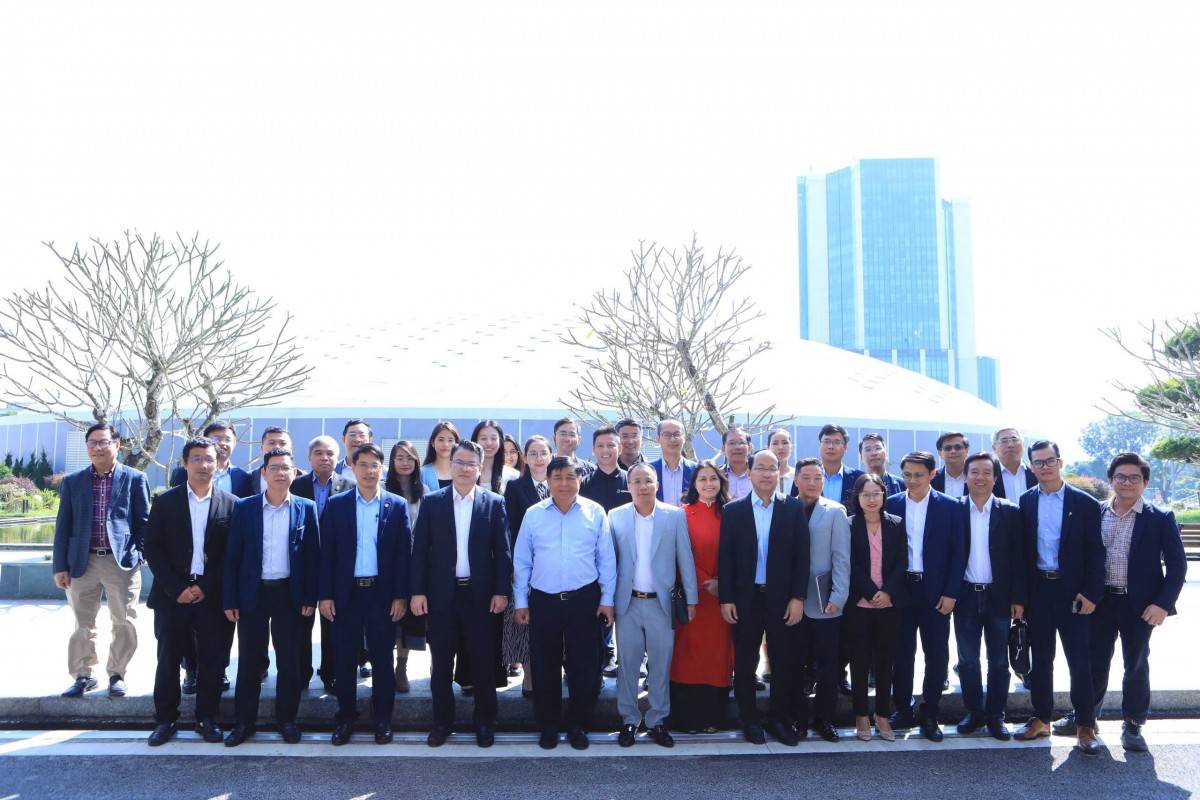
After more than three hours of dynamic and substantive discussion, the Deputy Prime Minister of the Government acknowledged all recommendations and called for immediate action. The Ministry of Finance was assigned to develop mechanisms for mobilizing resources and to further develop the National Innovation Center (NIC) as the nucleus of the strategic technology ecosystem. The Ministry of Science and Technology was tasked with finalizing standards and intellectual property frameworks, as well as commissioning key national scientific missions. The Vietnam Innovation Network (VIN) was instructed to form strong research groups, develop prototype products, and proactively propose priority implementation programs.
In closing the session, the Deputy Prime Minister delivered a special message to the expert community:“Experts must not only conduct research, but also engage deeply in policy consultation, technology orientation, human resource training, and knowledge transfer. We must fully leverage the global Vietnamese intellectual resource. Developing strategic technology sectors is a central mission to enhance national capacity. What remains is for us to act together—decisively and persistently—to place Vietnam on a new, stronger growth trajectory, toward prosperity and national strength.”
The Vietnam Innovation Network has been placed under the patronage of the National Innovation Center (NIC) by the Ministry of Finance to concretize the Party’s and the State’s guidelines on attracting and valuing talent, absorbing global technological excellence, and maximizing the intellectual resources of the entire nation—including Vietnamese experts and intellectuals overseas.
Established in 2018, the Network is now present in more than 22 countries and territories, with over 2,000 members comprising experts, scientists, chief engineers, and chief architects across key industrial sectors, in line with the implementation of Politburo Resolutions No. 57 and No. 68.
In addition to 10 Vietnam Innovation Networks overseas, NIC is also patronizing five specialized Innovation Networks dedicated to the development of strategic technology sectors. These networks coordinate with universities, research institutes, enterprises, and the National Data Center to address the country’s major national challenges.